Digitaldeskjournal
Latest Posts





DigitalDeskJournal
DigitalDeskJournal: A Digital Space for Productivity, Planning, Goals, and Creative Thinking
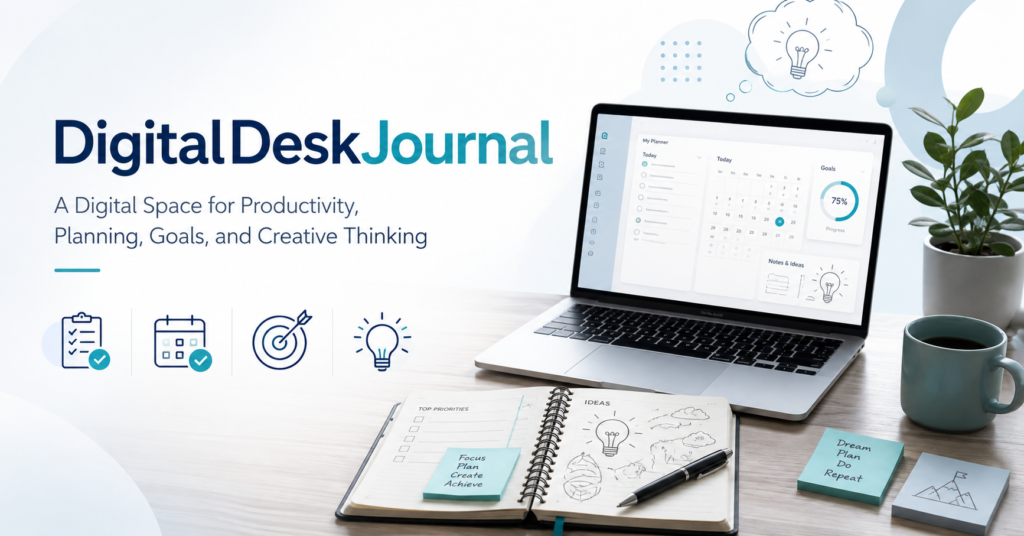
DigitalDeskJournal is an online platform centered on productivity, organization, goal setting, daily planning, creativity, and personal wellness. The website describes its purpose as helping digital professionals, creators, and thinkers organize ideas, maintain focus, track progress, and manage their daily workflow more effectively.
The platform combines practical productivity content with articles covering modern digital and professional subjects. Readers can explore topics related to planning routines, achieving goals, improving concentration, managing ideas, developing healthier habits, and navigating an increasingly digital lifestyle.
What Is DigitalDeskJournal?
DigitalDeskJournal is a productivity-focused digital publication and information platform. Its core categories currently include Daily Planning, Goal Setting, Productivity, Ideas, and Wellness. These subjects reflect the site’s broader emphasis on helping readers organize their work and personal lives while maintaining clarity and focus.
The website describes DigitalDeskJournal as a digital thinking space designed for people who want to capture inspiration, organize goals, reflect on progress, and create a more structured workflow. Its stated audience includes creators, professionals, entrepreneurs, and other people working in digital environments.
DigitalDeskJournal also publishes broader blog content related to business, technology, digital tools, online trends, and other topics relevant to modern readers.
The Main Purpose of DigitalDeskJournal
The central idea behind DigitalDeskJournal is organization without unnecessary complexity.
Modern professionals often manage emails, projects, meetings, personal goals, creative ideas, deadlines, and digital tools at the same time. Keeping all of these responsibilities mentally organized can become difficult.
DigitalDeskJournal focuses on methods that can help readers create structure around their time and ideas.
Creating More Organized Daily Routines
Daily planning is one of the website’s major content areas.
DigitalDeskJournal has published articles covering work-life balance, daily planner applications, time blocking, morning routines, and techniques for managing everyday mental pressure.
These subjects are closely connected because effective planning is not simply about creating a long list of tasks. It also involves deciding what deserves attention, identifying priorities, and creating realistic periods for completing important work.
Helping Readers Set Better Goals
Goal Setting is another major category on DigitalDeskJournal.
The website has covered subjects such as SMART goals, short-term and long-term goal alignment, vision boards, responsibility for personal goals, and methods for turning plans into measurable action.
For readers, this type of content can be useful when a large ambition feels difficult to manage. Breaking a goal into smaller actions can make progress easier to understand and track.
Daily Planning on DigitalDeskJournal
Daily Planning is particularly relevant to the DigitalDeskJournal identity because planning is one of the foundations of organized digital work.
A daily plan helps turn general intentions into specific actions. Instead of beginning a workday without direction, people can decide which activities require immediate attention and which can wait.
DigitalDeskJournal’s planning content addresses several areas that contribute to this process.
Time Blocking
Time blocking involves assigning specific periods of the day to particular activities.
Instead of constantly moving between unrelated tasks, a person may reserve one period for focused work, another for communication, and another for administrative responsibilities.
DigitalDeskJournal has featured dedicated content about using time blocking to gain better control over the day.
This approach may be especially relevant to remote workers, freelancers, business owners, and creators who have flexible schedules but still need structure.
Morning Routines
How a person begins the day can influence how organized the following hours feel.
DigitalDeskJournal has also published content about morning routines and their potential role in creating a more intentional start to the day.
A useful routine does not have to be complicated. Its value comes from consistency and from helping a person move from waking up to meaningful activity without unnecessary confusion.
Work-Life Balance
Productivity is not simply about completing more work.
DigitalDeskJournal includes work-life balance among its daily-planning topics, recognizing that sustainable organization also requires time for rest, relationships, personal interests, and recovery.
This makes its planning coverage broader than simple task management.
Goal Setting on DigitalDeskJournal
Goals give planning a direction.
A daily schedule may help someone stay busy, but clearly defined goals help determine whether that activity is moving toward something meaningful.
DigitalDeskJournal explores different ways of establishing and managing goals.
SMART Goals
SMART goal setting is one of the methods covered on the website.
This framework encourages people to think about whether a goal is specific enough to understand, measurable enough to track, realistic enough to pursue, relevant to larger priorities, and connected to a defined period.
For someone managing a business project, personal objective, or creative plan, this type of structure can make an unclear ambition easier to manage.
Short-Term and Long-Term Goals
DigitalDeskJournal also addresses the relationship between immediate actions and longer-term ambitions.
This distinction is important because large goals rarely happen through one action.
A long-term professional objective, for example, may depend on smaller weekly activities such as learning a skill, developing a portfolio, contacting clients, improving processes, or completing a particular project.
Connecting those smaller activities to the final goal makes daily work feel more purposeful.
Vision Boards and Goal Visualization
The site’s Goal Setting content also includes material about vision boards and using visualization as part of the planning process.
Visual tools may help some people keep important goals visible and maintain awareness of what they are working toward.
However, visualization works best when it is combined with realistic action rather than treated as a substitute for effort.
Productivity Content on DigitalDeskJournal
Productivity is another core DigitalDeskJournal category.
The site’s productivity articles address subjects such as managing time and energy, common productivity misconceptions, and reducing distractions to improve concentration.
This reflects an important difference between being busy and being productive.
A person can spend an entire day responding to notifications and switching between tasks while making little progress on the work that actually matters.
Managing Time and Energy
Time management is useful, but available energy also affects performance.
Some activities require deep concentration, while others can be completed with relatively little mental effort.
DigitalDeskJournal has discussed managing both time and energy as part of improving productivity.
Matching demanding tasks with periods of stronger concentration can sometimes be more effective than treating every hour of the day as identical.
Reducing Distractions
Digital environments create constant opportunities for interruption.
Messages, social platforms, email notifications, browser tabs, news feeds, and mobile applications can repeatedly divide attention.
DigitalDeskJournal includes content specifically about eliminating distractions and strengthening concentration.
For digital professionals, this subject is particularly relevant because the devices required for work are often the same devices that create distractions.
Productivity Myths
The platform also examines common productivity myths.
This can help readers avoid assuming that longer working hours automatically create better results or that every popular productivity technique will work equally well for everyone.
Individual work styles differ, so useful systems generally need some degree of adaptation.
Ideas and Creativity on DigitalDeskJournal
DigitalDeskJournal does not focus only on schedules and productivity. Creativity is another major part of its identity.
The Ideas category includes content about brainstorming, journaling, leadership, innovation, and techniques for capturing creative thoughts.
Idea Journaling
Ideas can appear unexpectedly and disappear just as quickly.
Keeping an idea journal provides a structured place to capture concepts before they are forgotten. DigitalDeskJournal has published material specifically about idea journals and their role in supporting creativity.
This can be useful for writers, entrepreneurs, designers, marketers, students, and anyone whose work depends on developing new concepts.
Journal Prompts
The Ideas section also includes daily journal prompts intended to encourage creative thought.
Prompts can be useful when someone wants to write or reflect but does not know where to begin.
They provide a starting point that can lead to deeper ideas, personal observations, or potential projects.
Brainstorming Techniques
DigitalDeskJournal has published multiple articles about brainstorming methods.
Structured brainstorming can help individuals and teams move beyond their first obvious ideas and explore different approaches to a problem.
For businesses and creative teams, the process becomes more valuable when good ideas are later evaluated and converted into practical actions.
Wellness and Digital Balance
Productivity becomes difficult to maintain when personal well-being is ignored.
DigitalDeskJournal therefore includes Wellness as one of its primary categories. Its wellness content covers subjects including healthy habits, complete wellness, digital detoxing, and the relationship between modern technology and everyday life.
Building Healthy Habits
Small repeated actions can influence long-term routines.
DigitalDeskJournal has published guidance aimed at helping busy people incorporate healthier habits into demanding schedules.
This fits naturally with the site’s wider focus on planning because routines are easier to maintain when they are intentionally incorporated into daily schedules.
Digital Detox and Technology Use
Always being connected can make it difficult to separate work from rest.
The website has explored digital detoxing and ways people may regain greater control over their relationship with technology.
For people who work online, completely avoiding digital devices may be unrealistic. A more practical objective can be creating clearer boundaries around when technology deserves attention.
DigitalDeskJournal and Modern Digital Tools
Although DigitalDeskJournal has strong roots in planning and personal organization, its newer content also reflects broader digital trends.
For example, the website has published material examining whether AI productivity tools genuinely save employees time. That article discusses common workplace uses of artificial intelligence, including generating text, summarizing meetings, organizing tasks, and analyzing information.
This type of content fits the DigitalDeskJournal theme because modern productivity increasingly depends on how effectively people choose and use digital tools.
A tool can automate part of a workflow, but its value still depends on whether it actually reduces unnecessary work.
Broader Blog Content on DigitalDeskJournal
The current DigitalDeskJournal homepage also contains a broader Blog section.
Recent posts extend beyond traditional productivity topics and include business websites, CRM systems, electrical technology, business development, gaming, branding, software compatibility, and other subjects.
The website has also published articles examining topics such as how casual games become popular through social media and how businesses can approach product packaging.
This means DigitalDeskJournal now functions as both a productivity-oriented resource and a broader digital publication.
Who Can Benefit From DigitalDeskJournal?
DigitalDeskJournal may be particularly relevant to people whose personal or professional lives involve significant digital work.
Freelancers and Remote Workers
People working independently often need to create their own schedules.
Daily planning, concentration strategies, goal tracking, and digital organization can therefore be especially useful to freelancers and remote professionals.
Creators
Writers, designers, marketers, developers, and other creators frequently need a reliable way to capture ideas and organize projects.
DigitalDeskJournal’s combination of idea journaling, brainstorming, goal setting, and productivity content directly relates to these needs.
Business Owners and Professionals
Business owners often manage several responsibilities simultaneously.
Planning systems and productivity techniques can help them distinguish urgent tasks from important long-term priorities.
The site’s broader business and technology coverage can also provide additional reading relevant to modern professional environments.
Students and Lifelong Learners
Students can also apply many of the same principles.
Time blocking, goal setting, focus management, journaling, and planning can be adapted to coursework, examinations, research, and independent learning.
How to Use DigitalDeskJournal Effectively
The best way to use DigitalDeskJournal depends on the problem a reader wants to solve.
If your days feel unorganized, begin with Daily Planning.
If you know what you want but struggle to turn it into action, Goal Setting may be more relevant.
If distractions or inconsistent work habits are the main challenge, explore Productivity.
For creativity and idea development, the Ideas section is likely to be more useful.
If constant digital activity is affecting balance and personal routines, Wellness content may provide a better starting point.
Readers can then explore the broader Blog section for technology, business, and other digital topics.
DigitalDeskJournal Compared With Traditional Productivity Blogs
DigitalDeskJournal differs from a narrow productivity blog because it combines several related areas rather than focusing exclusively on time management.
Daily planning deals with how a person structures immediate activities. Goal setting focuses on direction. Productivity addresses execution. Ideas support creativity, while Wellness introduces the personal balance required to maintain progress.
This combination provides a more complete view of personal organization.
Its expanding Blog section also gives DigitalDeskJournal a broader publishing role by covering digital tools, business, technology, gaming, and other modern topics.
FAQs About DigitalDeskJournal
What is DigitalDeskJournal?
DigitalDeskJournal is an online platform focused on daily planning, goal setting, productivity, ideas, wellness, and broader digital topics. The website describes its purpose as helping digital professionals, creators, and thinkers organize goals, ideas, and workflows.
What topics does DigitalDeskJournal cover?
Its primary categories include Daily Planning, Goal Setting, Productivity, Ideas, and Wellness. The website also publishes broader blog articles related to business, technology, digital tools, gaming, and other contemporary subjects.
Is DigitalDeskJournal useful for productivity?
Yes. A significant part of the site is dedicated to productivity subjects such as concentration, time and energy management, planning applications, time blocking, and productivity misconceptions.
Does DigitalDeskJournal include goal-setting advice?
Yes. Its Goal Setting category includes articles about SMART goals, vision boards, accountability, and connecting short-term activities with long-term objectives.
Does DigitalDeskJournal cover journaling and creativity?
Yes. Its Ideas section includes articles about idea journals, daily journal prompts, brainstorming methods, leadership, and turning innovation into action.
Is DigitalDeskJournal only about planners and journals?
No. Planning and productivity are central themes, but the website’s current Blog section also contains content related to technology, business, artificial intelligence, digital services, gaming, branding, and other subjects.
Conclusion
DigitalDeskJournal is a productivity-oriented digital platform built around planning, goal setting, creative thinking, organization, and wellness. Its core content can help readers explore methods for structuring their days, improving focus, developing ideas, setting meaningful goals, and creating healthier relationships with digital work.
At the same time, DigitalDeskJournal has expanded into broader blog topics related to technology, business, artificial intelligence, digital trends, and modern online life. For readers interested in becoming more organized while also following subjects connected with the digital world, DigitalDeskJournal provides a varied collection of practical and informational content.